
Wood fence styles
The common wood fence styles here:
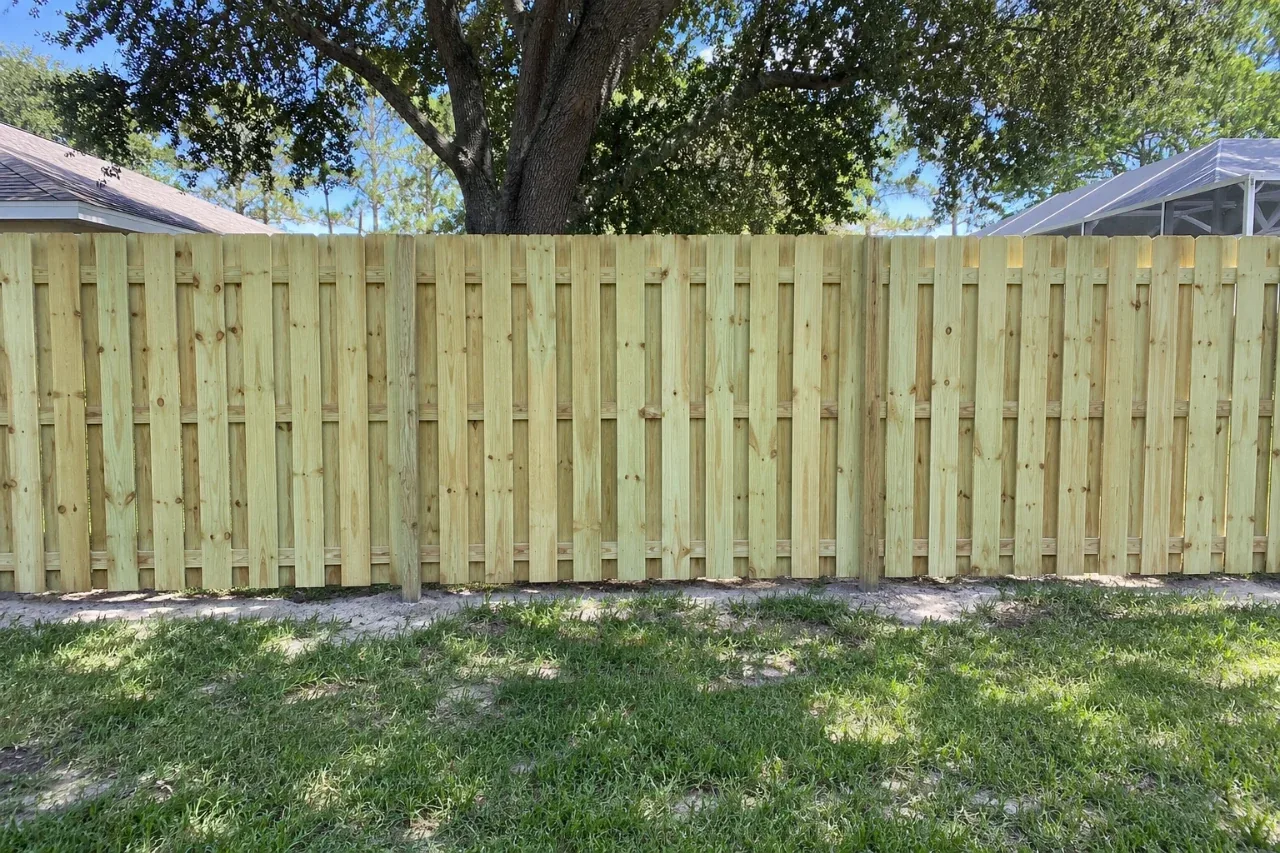
- Board-on-board or shadowbox privacy. Shadowbox alternates boards on each side of the rails, so it looks finished from both sides. Board-on-board overlaps the boards for a tighter screen. Both take more boards than a single-sided fence.
- Single-sided privacy. Boards on one side only. Palm Coast's rule that the finished side faces outward decides which side the boards go on.
- Picket. Since fences can't stand past the front of the house in most of Palm Coast, a picket fence here is usually a side or back yard fence.
Thumbtack's wood fence guide (updated October 26, 2026) says shadowbox and board-on-board look good on both sides and make good privacy fences, but cost more than simpler styles because they take more boards and finishing supplies. It calls picket fences semi-private and relatively inexpensive.
The finished-side rule is worth repeating. The city's fence sheet says fences are installed "with the finished side facing the exterior of the property." On a single-sided fence, the rails and posts face your yard, not your neighbor's.
Pine or cedar
Thumbtack says pressure-treated pine is fairly affordable and "can last up to 30 years if treated," while cedar resists insects, moisture and rot and lasts about 15 to 25 years depending on treatment. For material alone, it cites Hunker at roughly $8 to $10 a foot for pressure-treated wood and $12 to $16 for cedar. Those are national figures and don't include labor.
Treatment is graded by use, and the grade matters most for the part of a post that sits in damp ground. The American Wood Protection Association's residential guide lists posts in ground contact at Use Category 4A or higher, and fence pickets above ground at Use Category 3B or higher. The category is printed on the end tag or treatment stamp, so you can read it on the posts before they go in the ground.
Posts in sandy ground
Loose, sandy soil changes how a post should be set. This Old House's post guide (updated May 22, 2026) gives the rules of thumb, including what to do differently in loose ground:
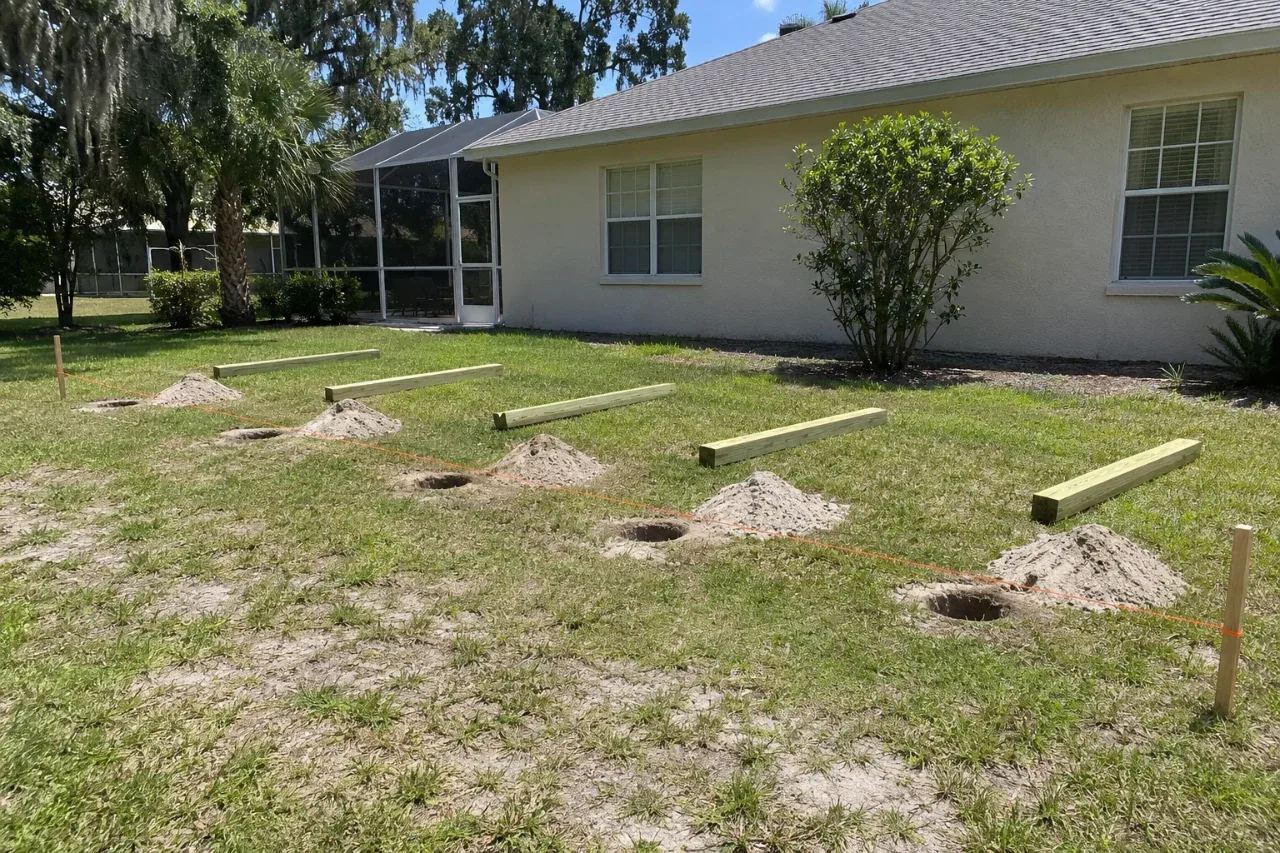
- Dig about one-third of the post's height, plus about 6 inches for the gravel base. It lists 24 to 30 inches for most picket or lattice fences.
- Put about 6 inches of 3/4-inch crushed stone in the bottom of the hole for drainage, and tamp it.
- In loose soil, set posts deeper than usual, mix gravel into the backfill and compact it firmly.
- Concrete isn't always needed, but the guide says end posts and gate posts need a concrete footing. Bring it to about 2 inches below grade, slope it away from the post, and let it set at least 24 hours.
- Most residential posts go 6 to 8 feet apart, and 4 to 6 feet at corners and other high-stress spots.
These are general guidelines, not a design for your fence. A contractor who sets posts in local soil every week will have a method, and asking about it is one of the better ways to judge a quote. See the hiring guide.
What Palm Coast requires of a wood fence
- Owner's acknowledgement for any new or replacement fence; no building permit.
- Height: up to 6 feet in side and rear yards behind the front of the house; 4 feet within 20 feet of a saltwater waterway unless the fence is open.
- Rot-resistant ground contact. The city's sheet requires it for parts touching the ground and lets treated lumber stay unfinished.
- Color: if you stain or paint, earth tones need a light reflectance value of 25 or higher, and white or light pastels need 80 or higher. Orange, purple and fluorescent colors are out.
- Shrubs along a street side, a saltwater canal or a golf course: 3-gallon plants at 3 feet on center in front of a solid fence.
The city rules page covers easements, swales and PEP panels.
Wood and wind
A solid wood privacy fence is a sail. Engineering Express, a Florida engineering firm, notes that solid fences let wind pressure build against them while open designs let the wind pass. Post depth, spacing and concrete at the ends are what hold a privacy fence up through a tropical storm. See fences and hurricane wind.
What wood fences cost
| Figure | Amount | Source |
|---|---|---|
| Typical wood fence, national | $1,429 to $4,925 | Thumbtack, updated October 26, 2026 |
| Per linear foot, national | $15 to $45 | Thumbtack, October 2026 |
| 4-ft pressure-treated pine, Orlando | $18 per foot | Thumbtack, updated July 1, 2026 |
| 6-ft pressure-treated pine, Orlando | $17 per foot | Thumbtack, July 2026 |
| 6-ft double-sided, Orlando | $25 per foot | Thumbtack, July 2026 |
| Cedar, Orlando | $18 to $19 per foot | Thumbtack, July 2026 |
| Single wood gate / double gate, national | $75 / $150 | Thumbtack, July 2026 |
The Orlando rows are prices Thumbtack lists from fence pros it surveyed there, the only Florida city on its general fence page; none are for Palm Coast. The written price for your yard is what counts. More on the cost page.
What commonly goes wrong
- Posts rated for above-ground use set in the ground. Check the tag.
- Shallow posts in loose sand that lean after the first heavy rain or windy afternoon.
- Concrete mounded above grade so water sits against the post.
- The wrong side out, which breaks the city's finished-side rule.
- A gate hung on a line post that wasn't set for the weight.
- Boards touching the sand, where they stay wet.
Who wood isn't for
If you want a fence you'll never stain or seal, look at vinyl. If it has to enclose a pool or stand near saltwater, an open aluminum fence often fits the rules better. If it fronts an arterial or collector road, wood is still allowed where chain link and plain metal aren't.
Questions homeowners ask
Do I have to stain a new pine fence?
Not under city rules: the fence sheet lets treated lumber stay unfinished. If you do stain, the color has to meet the city's reflectance limits.
How deep should the posts go?
This Old House's rule of thumb is about one-third of the post's height plus about 6 inches for gravel, deeper in loose soil. Ask the contractor what depth they plan and how they backfill.
Is a 6-foot wood fence allowed everywhere in my back yard?
Behind the front of the house, yes, except within 20 feet of a saltwater waterway, where a solid fence is capped at 4 feet. See canal lot fences.
Which side faces the neighbor?
The finished side. It's a city rule, not etiquette.
How this site helps: your request goes to one independent local fence contractor, who prices the fence and builds it. This site does neither.
Related guides
Sources
- Thumbtack, wood fence cost, updated October 26, 2026; fence installation cost, updated July 1, 2026.
- American Wood Protection Association, residential use categories.
- This Old House, how to install a fence post, updated May 22, 2026.
- Engineering Express, fence design overview, updated April 24, 2025.
- City of Palm Coast, fence regulations sheet, read November 2026.