
Which lots this covers
ITT Levitt dug Palm Coast's saltwater canals in the 1960s and 1970s. The Palm Coast Observer put them at 23 miles in 2012; FlaglerLive's 2023 report on dredging gave 26 miles and placed them in the C Section and a sliver of the F Section. Freshwater canals and stormwater ditches elsewhere in the city don't fall under the saltwater rule below, though they have their own placement rule.
When the council debated the rule in 2015, FlaglerLive reported that it was aimed at saltwater-canal lots in the F and C Sections and that freshwater canals weren't targeted. City Manager Jim Landon said that on a saltwater canal the atmosphere "seems to be much more wide open," and FlaglerLive's July report said the see-through rule was meant to protect neighbors' views of the water.
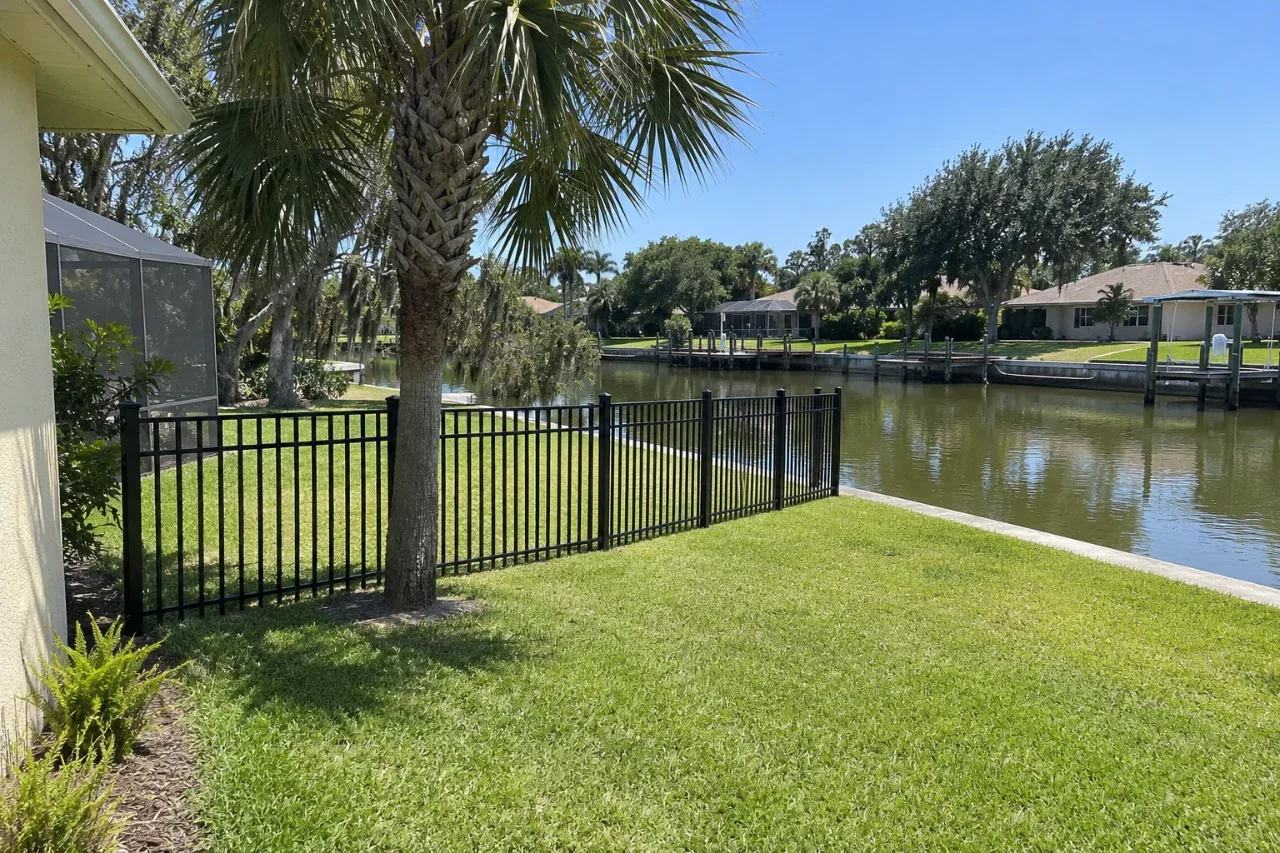
The 20-foot rule
The city's fence regulations sheet says a fence behind the house and within 20 feet of a saltwater waterway "is limited to a height of four feet." Two exceptions follow:
- An open fence may reach 6 feet in that same zone.
- A fence enclosing a pool deck may reach 6 feet if it's set back at least 7.5 feet from the side property lines and at least 15 feet from the saltwater waterway.
Beyond 20 feet from the water, the normal limit for side and rear yards behind the front of the house applies: 6 feet.
What counts as open
The current sheet doesn't define "open fence." When the council approved the canal rule on first reading in July 2015, FlaglerLive reported the standard as a fence with "at least 50 percent visibility," or one no more than 4 feet high. Aluminum picket fences and chain link are see-through. A solid vinyl privacy panel or a board-on-board wood fence is not. If your design is somewhere in between, such as shadowbox wood, semi-privacy vinyl or wide-spaced pickets, ask the Zoning Division at (386) 986-3751 before ordering material.
Laying out a canal yard
Take a lot whose rear property line is the seawall. Measure 20 feet back from the water toward the house. Anything you build between that mark and the seawall is capped at 4 feet unless it's open. A 6-foot privacy fence along the side lines can run back toward the house only as far as the 20-foot mark, then step down to 4 feet or switch to an open style for the last 20 feet. Where exactly the city measures "the waterway" from on your lot is a question for Zoning, not for a tape measure guess.
Pools on canal lots
Many canal homes have pools, and a pool fence has two jobs here: it has to meet Florida's pool barrier law, and it has to fit the canal rule. The pool-deck exception is the city's answer. A deck enclosure set at least 7.5 feet from the side lines and 15 feet from the water may stand 6 feet. A barrier closer than that is held to the 4-foot limit unless it's open, and Florida's pool law requires a barrier at least 4 feet high on the outside, so a solid 4-foot fence near the water leaves no room to spare. The pool fence guide lists the state's gate and latch rules.
Planting along the canal
The fence sheet points to the city's landscaping rules for fences along saltwater canals, street sides and golf courses: plants at 3 feet on center, 3-gallon size. Open-style fences, such as chain link, are exempt. A solid fence near the water brings a shrub row with it; an open one doesn't.
What salt water and surge do
During Hurricane Matthew on October 7, 2016, the National Weather Service in Jacksonville recorded a storm surge depth of 6 feet in a Palm Coast saltwater canal, roughly 44 inches above the bulkhead. Water that high over a back yard carries debris against anything standing in it.
Salt air is the slower threat. Thumbtack says the powder coat makes aluminum fences less susceptible to rust and corrosion, and calls them a good option in coastal areas. Chain link and other steel fences rely on their galvanizing or coating, and the city allows chain link only in black or bronze. Wood posts in damp ground need a ground-contact treatment rating; see the wood fence guide.
Near the seawall
Repairs to docks, boat houses and seawalls need a building permit before work starts, according to the city's 2024 storm advisory. A fence doesn't, but posts dug right behind a seawall sit in the fill the wall holds back. Ask the contractor how close to the wall they plan to set the last post, and why.
Questions canal owners ask
Can I have a 6-foot privacy fence on a canal lot?
Yes, on the side and rear lines more than 20 feet from the saltwater waterway. Within 20 feet, it drops to 4 feet unless the fence is open, or it's a pool-deck enclosure that meets the setbacks.
Does this apply on a freshwater canal?
The rule names saltwater waterways. Freshwater canals and stormwater ditches have their own placement rule: the fence goes behind the top of the bank, on your side.
Is aluminum the usual choice on the water?
It's open, comes in black, bronze or white under city rules, and Thumbtack describes it as suited to coastal areas. Whether it's right for your yard depends on what you need it to do.
Was my old fence grandfathered?
In 2015 the city manager told FlaglerLive that owners in compliance when the rules changed couldn't be made to comply with the new ones. A replacement fence is a new acknowledgement, though, so plan the new fence to today's rules.
How this site helps: your request goes to one independent local fence contractor who works on Palm Coast lots. This site doesn't measure lots or rule on the code.
Related guides
Sources
- City of Palm Coast, fence regulations sheet, undated, read November 2026.
- City of Palm Coast, post-storm advisory, October 10, 2024.
- FlaglerLive, proposed canal rule, April 1, 2015; council approval, July 8, 2015; canal dredging, January 10, 2023.
- Palm Coast Observer, saltwater canals, September 13, 2012.
- National Weather Service Jacksonville, Hurricane Matthew summary.
- Thumbtack, aluminum fence cost, updated July 10, 2026.
- Florida Statutes 515.29, 2026.